
 Book Appointment

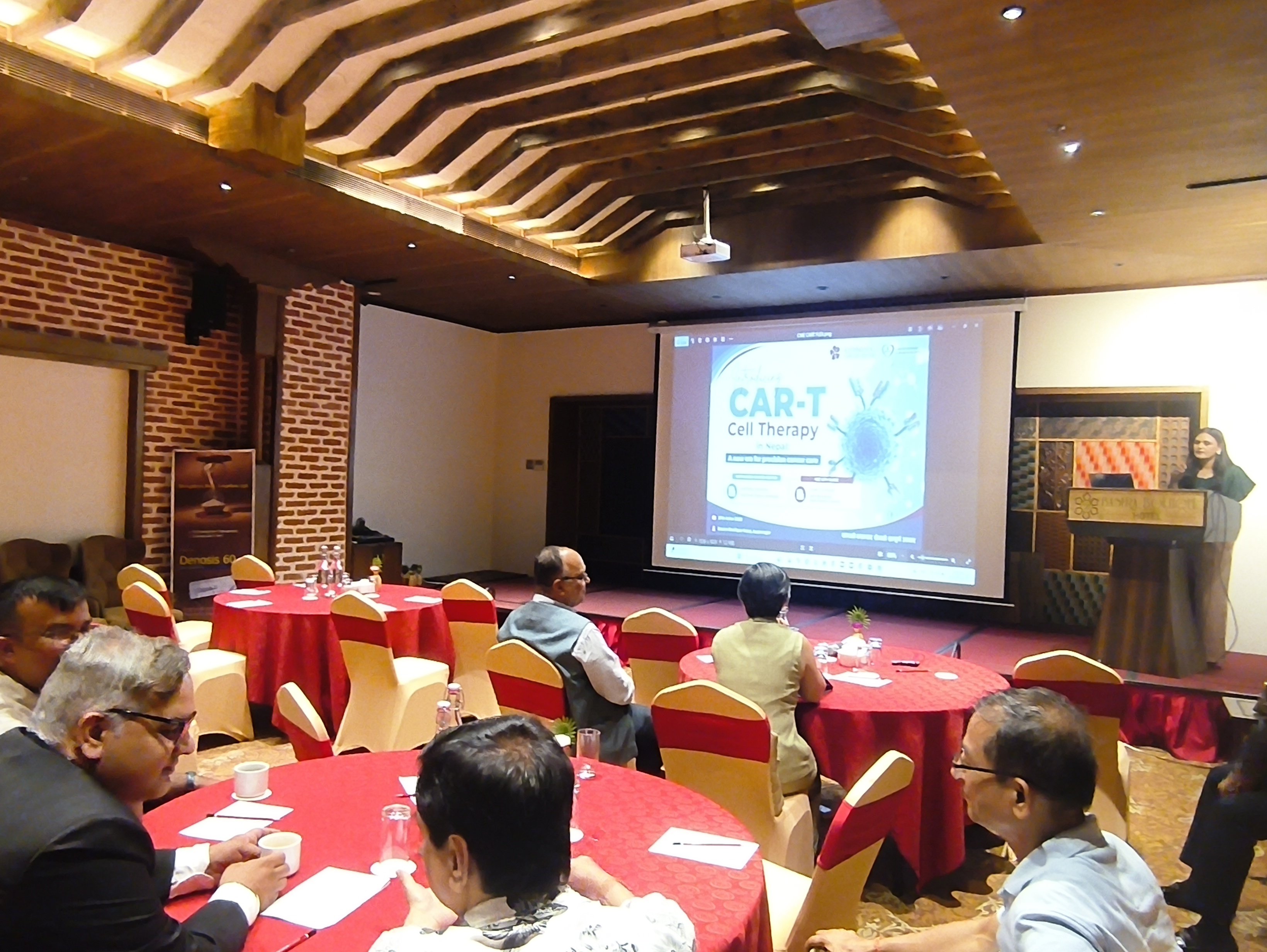
CAR T-Cell Therapy in Nepal CME 2026: Advancing Precision Cancer Care
The conference venue was fuller than we expected last Saturday. A few months earlier, Nepal's Department of Drug Administration had approved a domestically produced CAR-T therapy developed by CRM Nepal, and by the time our CME session started on July 11, 2026, word had clearly spread. This wasn't a talk about a treatment that might arrive here someday. It was a conversation about something that was already available.
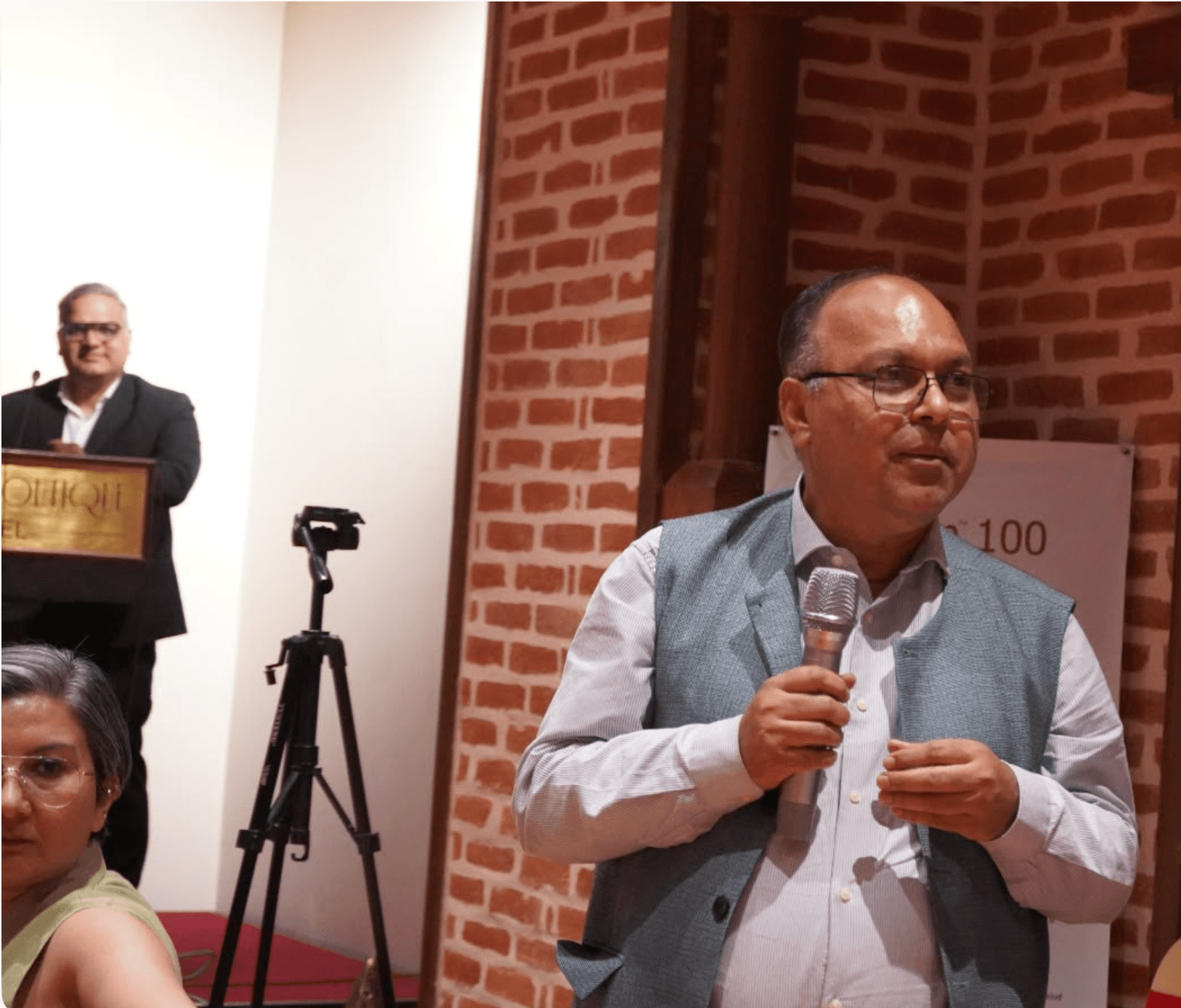
Welcome remarks — Prof. Dr. Anjani Kumar Jha
Prof. Dr. Anjani Kumar Jha opened the session with a short welcome, framing the day less as a lecture series and more as a working discussion on how cancer treatment has advanced in nepal starting from basic facilities to latest technique like CAR-T . He stressed that Nepal has now capacity both in term of skilled manpower and latest technology , it is not necessary to go to other countries for cancer treatment,
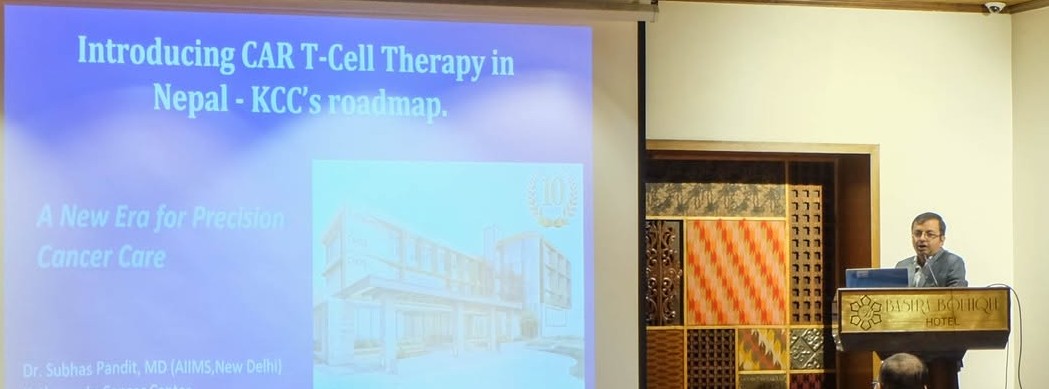
Introducing CAR T-Cell Therapy — Dr. Subhas Pandit
Dr. Pandit took the first slot and covered the basics: how a patient's own T-cells are collected, engineered to recognize cancer, and infused back into the body. He spent extra time on why this counts as a genuine shift in cancer treatment rather than an incremental step forward, which set up the rest of the afternoon well.
CAR-T in Nepal, current state — Dr. Sachita Baniya
Dr. Baniya's talk was the reality check the room needed. She laid out exactly where Nepal stands with CAR-T adoption today ,what's working, and what still needs to be built, from referral pathways to patient selection criteria. Approval is one milestone; she made clear there's real groundwork still ahead before this reaches patients at scale.
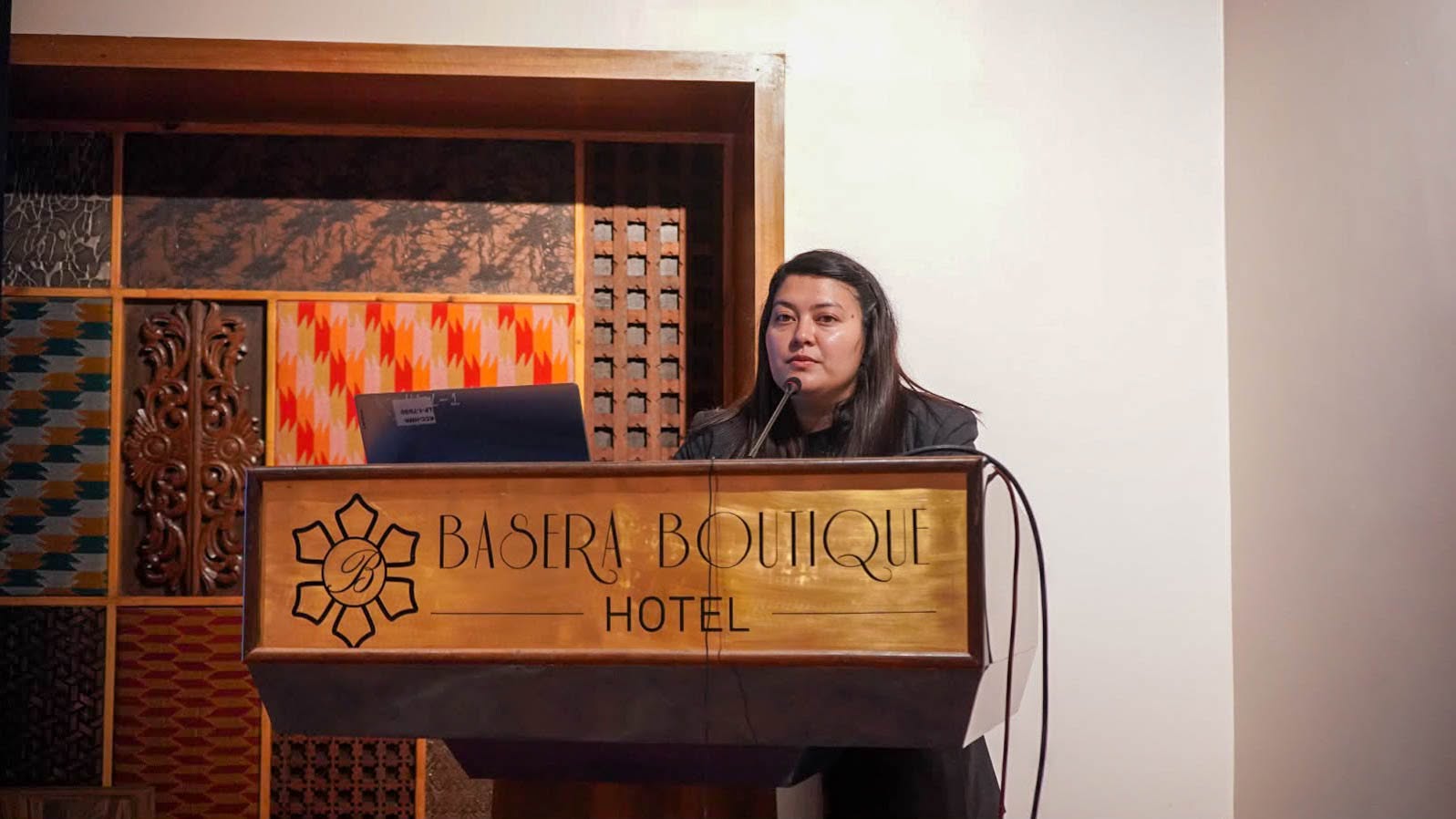
CAR-T for childhood cancer — Dr. Ritu Lamichhane
This was the talk that stayed with people. Dr. Lamichhane spoke about children with relapsed or refractory cancers who've already gone through standard chemotherapy and radiation without success. For that group, CAR-T isn't a marginal improvement - it may be the option that was missing.
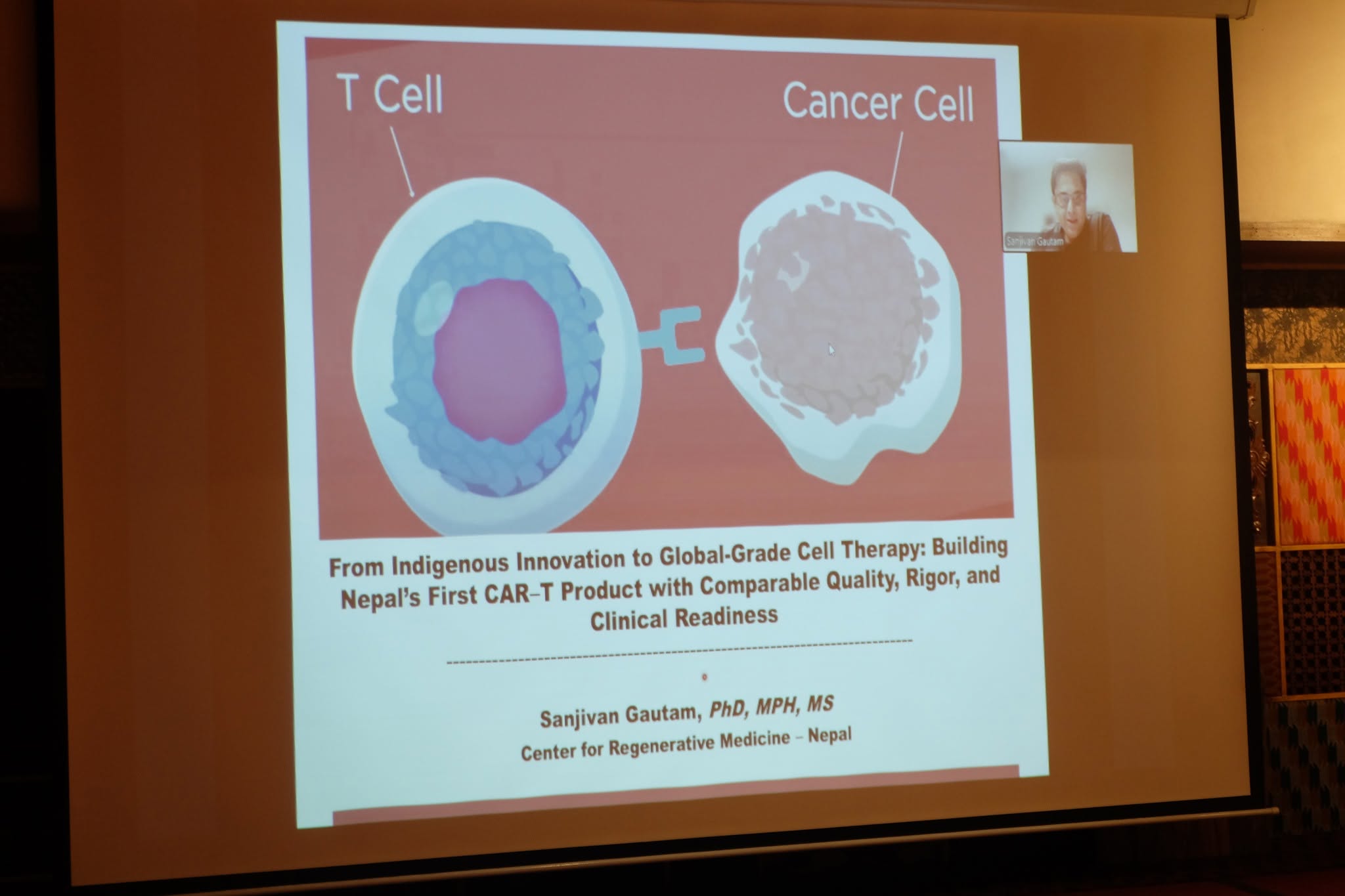
Manufacturing and engineering — Dr. Sanjeevan Gautam
Dr. Gautam gave a virtual lecture, walked through how CAR-T cells are actually produced — apheresis, viral vector engineering, quality control — and connected it directly to CRM Nepal's domestic manufacturing process. For a room mostly full of clinicians, this was a rare look at the supply side of a therapy for which there was very little information. == He also informed that Nepal has now become one of 8 countries with indigenous CAR-T manufacturing facility. ==
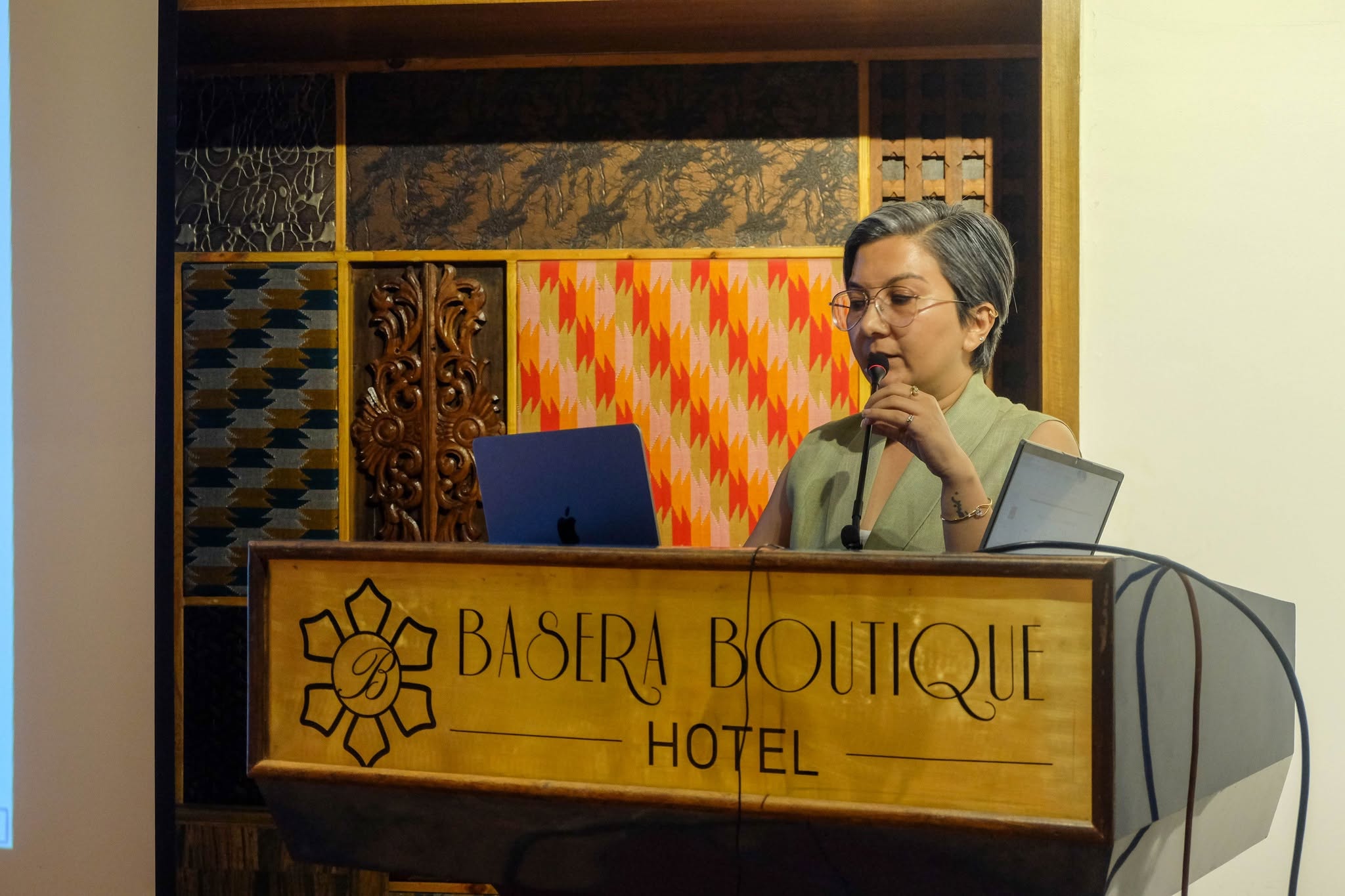
Dr. Simit Sapkota closed the formal talks by naming the hard parts directly: cost, logistics, and the staffing a CAR-T program actually requires. He didn't dress it up, but he framed it as the argument for building this capacity locally rather than outsourcing to other countries, and make it a model other low-resource settings can use too.
Q&A
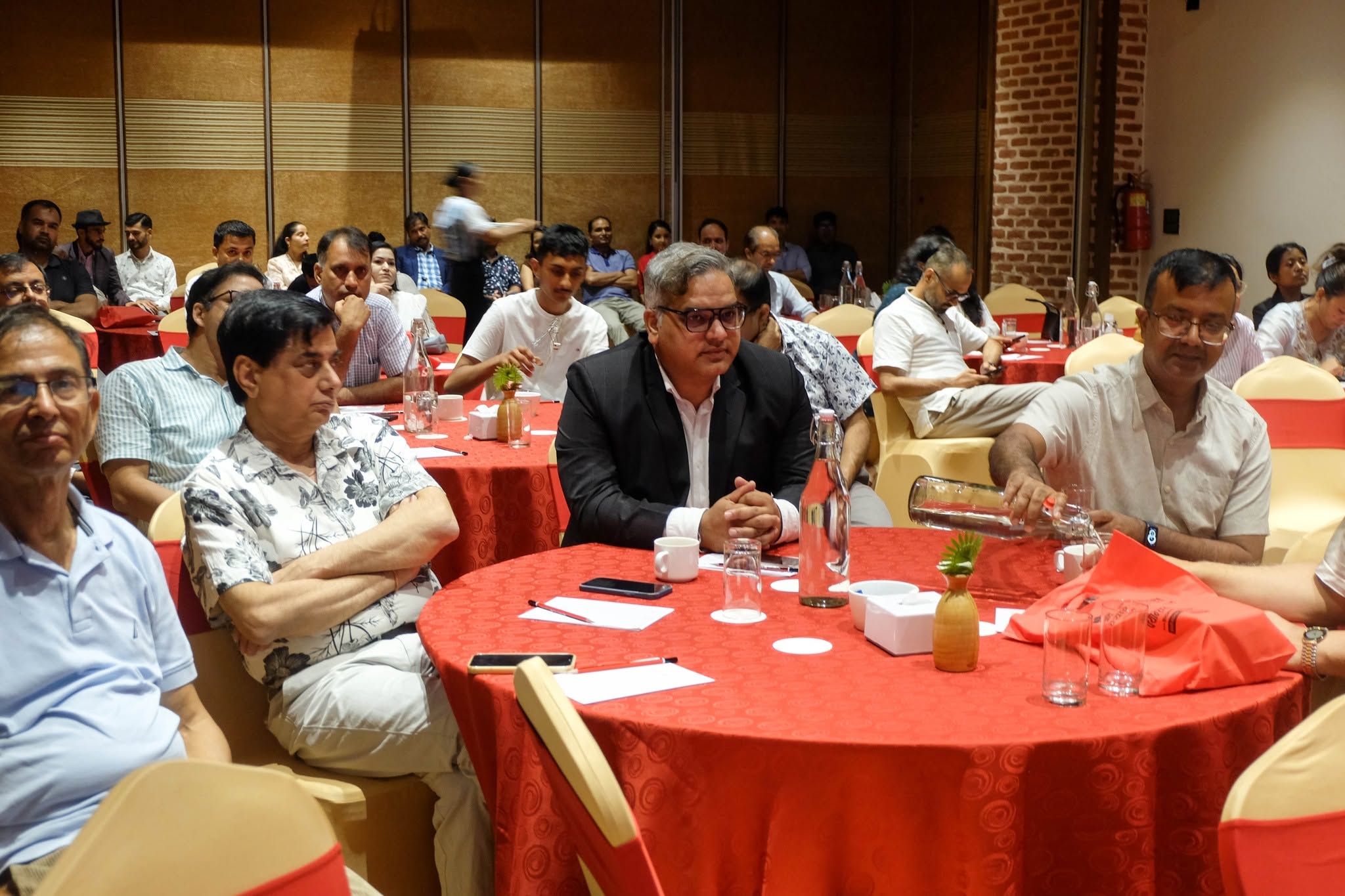
The floor opened up after the talks and stayed busy — SFO Patron Dr Madan K Piya, Prof. Dr Bishnu dutta Paudel and questions on eligibility, bridging therapies, and how to talk with families who've already heard the term "CAR-T" and want to know if it's an option for them. The panel took each one directly, and a fair number of trainees in the back stuck around well past the scheduled end time.
Where this leaves us
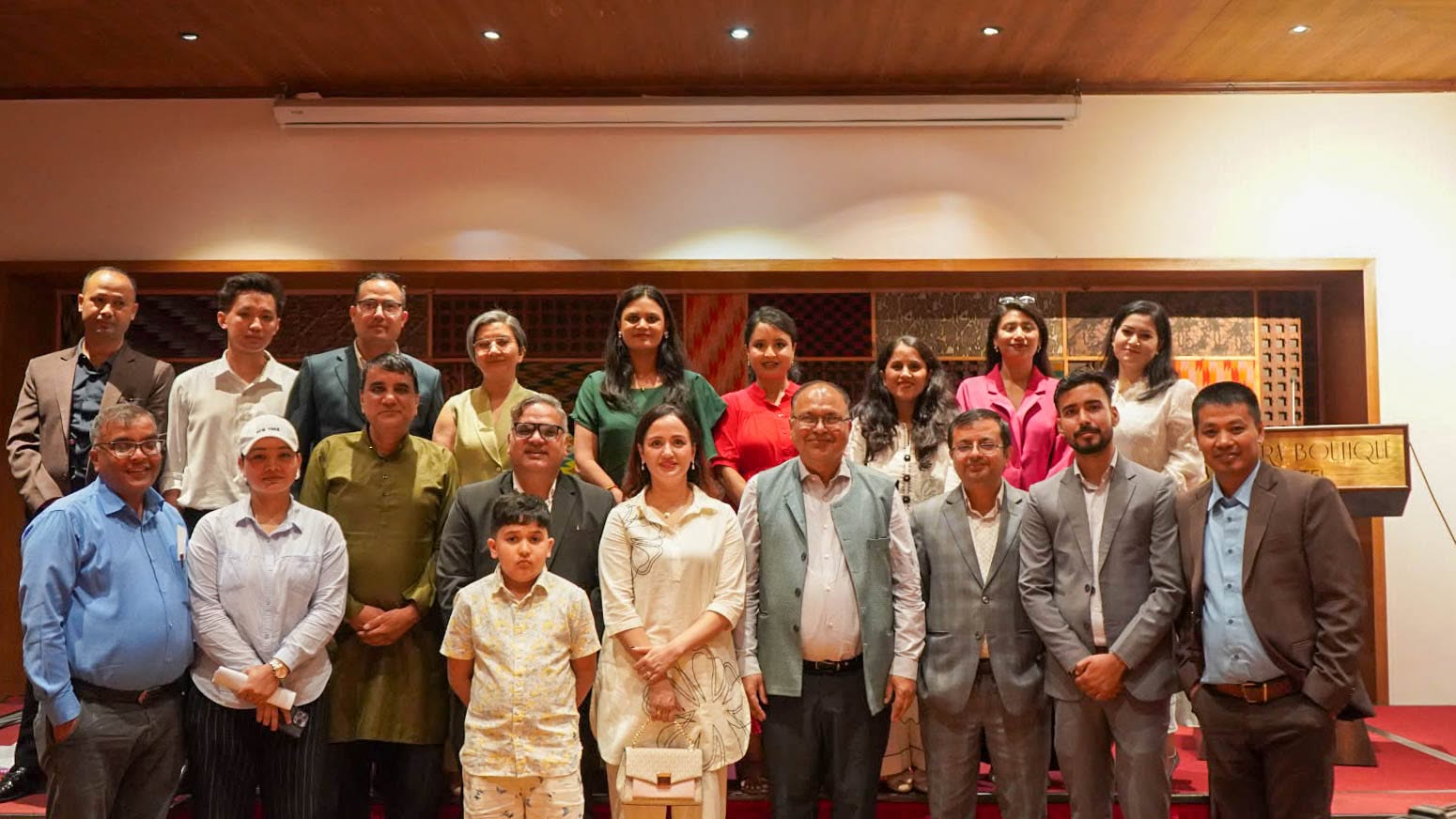
With domestic manufacturing now approved, the distance between a global treatment breakthrough and a therapy available to patients in Nepal just got a lot shorter. There's still work ahead on referral systems, training, and infrastructure, but the session made one thing clear: we are ready to start CAR T and other cellular therapies in Nepal now.
If you have questions about CAR-T referrals, or you're a clinician interested in how this program is being built, reach out through our KCC City Clinic New Baneshwor or the Hemato-Oncology & Cellular Therapy department at our hospital in Tathali, Nala Road.
Media Coverage
Nepali health media picked up the domestic CAR-T milestone. Swasthya Khabarpatrika and Health News Nepal both covered the launch, noting it places Nepal among the seven countries producing CAR-T cells domestically and about 35 offering the treatment at all, at a fraction of the cost patients pay in India. ShareHub Nepal / ICT Frame covered the earlier launch announcement as new hope for blood cancer patients who previously had to travel abroad. Ukeraa also reported on the story.