
 Book Appointment

What is CRS and HIPEC?
Cytoreductive Surgery (CRS) involves surgically removing all visible cancer from the abdomen. HIPEC (Hyperthermic Intraperitoneal Chemotherapy) then delivers heated chemotherapy directly into the abdomen during the same operation to destroy remaining microscopic cancer cells.
The heat — maintained at 41–42°C — enhances the chemotherapy's effect, targeting cancer cells more effectively without exposing the body's bloodstream to high drug concentrations. This makes CRS-HIPEC more effective than systemic (IV) chemotherapy for selected patients, delivering a higher dose directly to the cancer site with fewer systemic side effects.
What is Peritoneal Carcinomatosis?
Peritoneal carcinomatosis is the spread of cancer to the peritoneum — the lining of the abdominal cavity. It is most commonly seen in:
- Pseudomyxoma Peritonei — a build-up of mucus in the peritoneal cavity
- Colorectal cancer — cancer arising from the colon or rectum
- Appendix cancer — mucin-producing cancer originating in the appendix
- Ovarian cancer — cancer forming in the tissue of the ovary
- Stomach cancer — cancer in the gastric mucosa lining the stomach
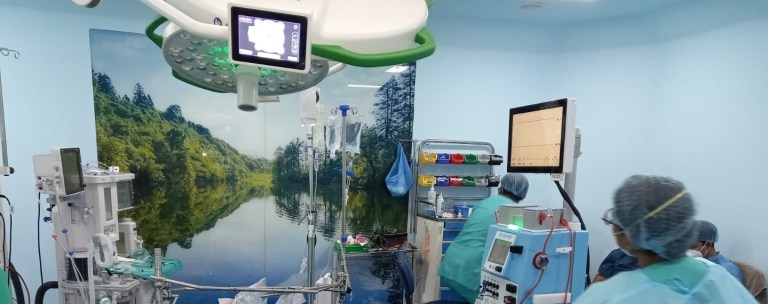
How is CRS and HIPEC Performed?
Step 1 — Cytoreductive Surgery (CRS): Surgeons open the abdomen and remove all visible cancer from the peritoneum and affected organs — which may include portions of the intestine, uterus, ovary, stomach, or colon. The goal is complete cytoreduction (CC-0: no visible residual cancer) or near-complete cytoreduction (CC-1: only deposits smaller than 2.5 mm remaining).
Step 2 — HIPEC: Immediately after surgery, a heated chemotherapy solution is circulated throughout the abdominal cavity for approximately 90 minutes using a specialised perfusion machine in the operating theatre.
Step 3 — EPIC (selected patients): For some patients, Early Postoperative Intraperitoneal Chemotherapy is administered through abdominal drains for 5 days after surgery to target any residual cancer cells.
Benefits of CRS and HIPEC
- Improved survival: CRS-HIPEC significantly extends survival compared to systemic chemotherapy alone for selected cancers. Patients with appendix cancer treated with this technique have demonstrated survival of up to 16 years in published series.
- Best outcomes with early disease: Patients with less advanced peritoneal spread benefit the most. Complete cytoreduction (CC-0 or CC-1) produces the best results.
- Hope for advanced cases: Even in cases with small residual deposits (CC-2), this approach may still offer meaningful benefit over systemic treatment alone.
Who Can Benefit?
Good candidates for CRS-HIPEC:
- Peritoneal carcinomatosis from colorectal, appendix, or stomach cancer
- No cancer spread outside the abdomen
- Good overall health and performance status
- Low Peritoneal Cancer Index (PCI) score (less than 20)
- Prior chemotherapy with good response
Not suitable for CRS-HIPEC:
- Patients with poor performance status
- Cancer spread beyond the abdominal cavity
- Extensive or bulky peritoneal disease requiring major bowel resection
Frequently Asked Questions
Is HIPEC available in Nepal?
Yes. Kathmandu Cancer Center performs CRS-HIPEC at its Bhaktapur facility — one of the very few centres in Nepal offering this procedure.
How long is the surgery?
CRS-HIPEC typically takes 6 to 12 hours depending on the extent of disease. Patients are admitted to the ICU immediately after surgery.
What is the recovery time?
Hospital stay is typically 10 to 14 days. Full recovery takes 6 to 8 weeks. Your surgical oncologist will advise based on your specific procedure.
How do I know if I am a candidate?
A multidisciplinary assessment including imaging, PCI scoring, and review of prior treatment history is required. Request a surgical oncology consultation at KCC.
Book an Appointment at KCC
Kathmandu [City Clinic ,New baneshwor] · Bhaktapur [Hospital,Tathali] ·
Request an Appointment (Whatsapp) →