 Kathmandu
Cancer Center
Kathmandu
Cancer Center
Kathmandu
Cancer Center
Kathmandu
Cancer Center
Discovering you have bladder cancer can feel overwhelming. But here's the good news: with early detection, it's highly treatable. At Kathmandu Cancer Center (KCC), we provide world-class bladder cancer treatment right here in Nepal – so you can stay close to family while receiving international-standard care.
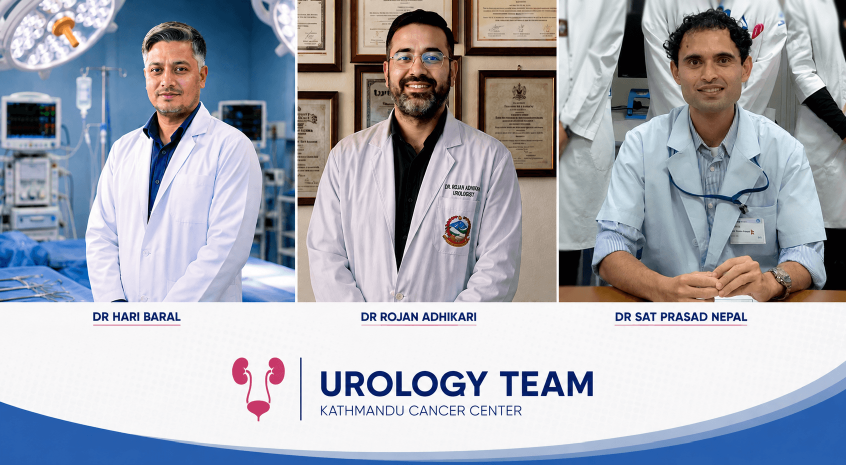
Urology Team
Bladder cancer starts in the cells lining the bladder, the organ that stores urine before it leaves the body. It is one of the more treatable cancers when caught early, and even when it is found later, there are strong treatment options. The care team at KCC sees and treats bladder cancer regularly, from the earliest stage through to advanced disease.
If you notice blood in your urine, even once, even if it clears up on its own, see a doctor. Do not wait for other symptoms to appear first.
Doctors first divide bladder cancer into two types, based on how deep the tumor has grown into the bladder wall. This decides almost everything about the treatment plan that follows.
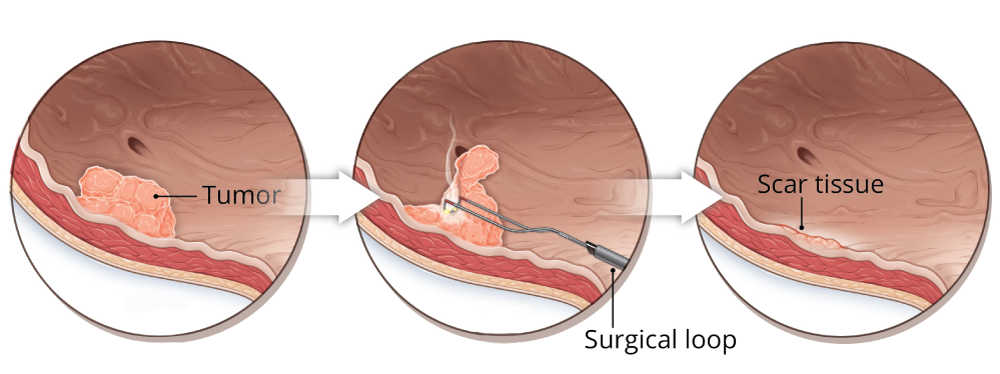
The cancer stays in the inner lining of the bladder and has not grown into the deeper muscle wall. This is the more common type. It is usually treated by removing the tumor through a scope (TURBT), often followed by BCG therapy placed into the bladder to lower the chance of it coming back.
The cancer has grown into the muscle wall of the bladder and has a higher chance of spreading elsewhere in the body. This needs stronger treatment, usually either surgery to remove the bladder, or bladder preservation combining TURBT, radiotherapy and chemotherapy.
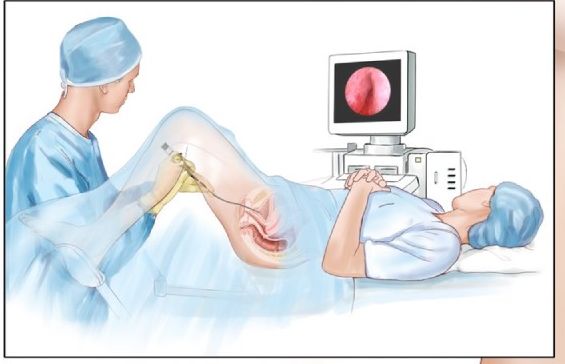
Diagnosis usually involves a urine test to check for cancer cells or hidden blood, a CT or ultrasound scan to look inside the bladder and surrounding organs, and cystoscopy, where a doctor passes a thin camera through the urethra to look directly inside the bladder and take a tissue sample if anything unusual is seen. Staging then runs from stage 0, where cancer is only on the surface lining, through to stage 4, where it has spread to distant organs such as the liver or lungs.
Whether your cancer is confined to the bladder lining or has grown into the muscle wall, the same team plans your care, so the treatment fits your cancer rather than the other way around.
BCG (Bacillus Calmette-Guerin) is a weakened form of a bacteria that has been used safely for decades to treat early, high-risk bladder cancer. It does not act like chemotherapy. Instead, it trains your own immune system to recognise and attack any remaining cancer cells in the bladder lining after TURBT.
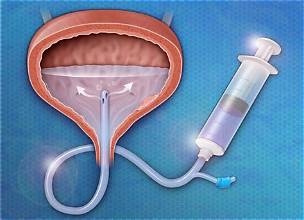
A thin catheter is passed through the urethra into the bladder, the BCG solution is instilled, and the catheter is removed. The whole process takes only a few minutes and does not require anaesthesia.
You hold the solution in your bladder for about two hours, changing position occasionally so it reaches the whole bladder lining, before passing it out normally.
An induction course is usually given once a week for six weeks, followed by a maintenance schedule over one to three years, depending on your risk level.
Mild burning during urination, needing to urinate more often, and slight tiredness or low fever for a day or two are common and expected. These are managed and monitored at each visit.
For muscle-invasive bladder cancer, removing the bladder is one option, but it is not the only one. Bladder preservation combines TURBT to remove as much visible tumor as possible, with radiotherapy and usually chemotherapy, to treat the cancer while keeping the bladder and your natural way of passing urine.
This approach is especially considered for older patients, those who are medically frail or unfit for a major operation, and anyone who places high value on keeping normal bladder function and avoiding a stoma. It is delivered jointly by the urology and radiation oncology teams, with regular cystoscopy afterward to check the bladder remains cancer free.
Radiotherapy is painless and is usually given five days a week over several weeks, often alongside chemotherapy to make it more effective. Dr. Simit Sapkota leads the chemotherapy, immunotherapy and radiotherapy planning for bladder preservation cases, working closely with the urology team throughout.
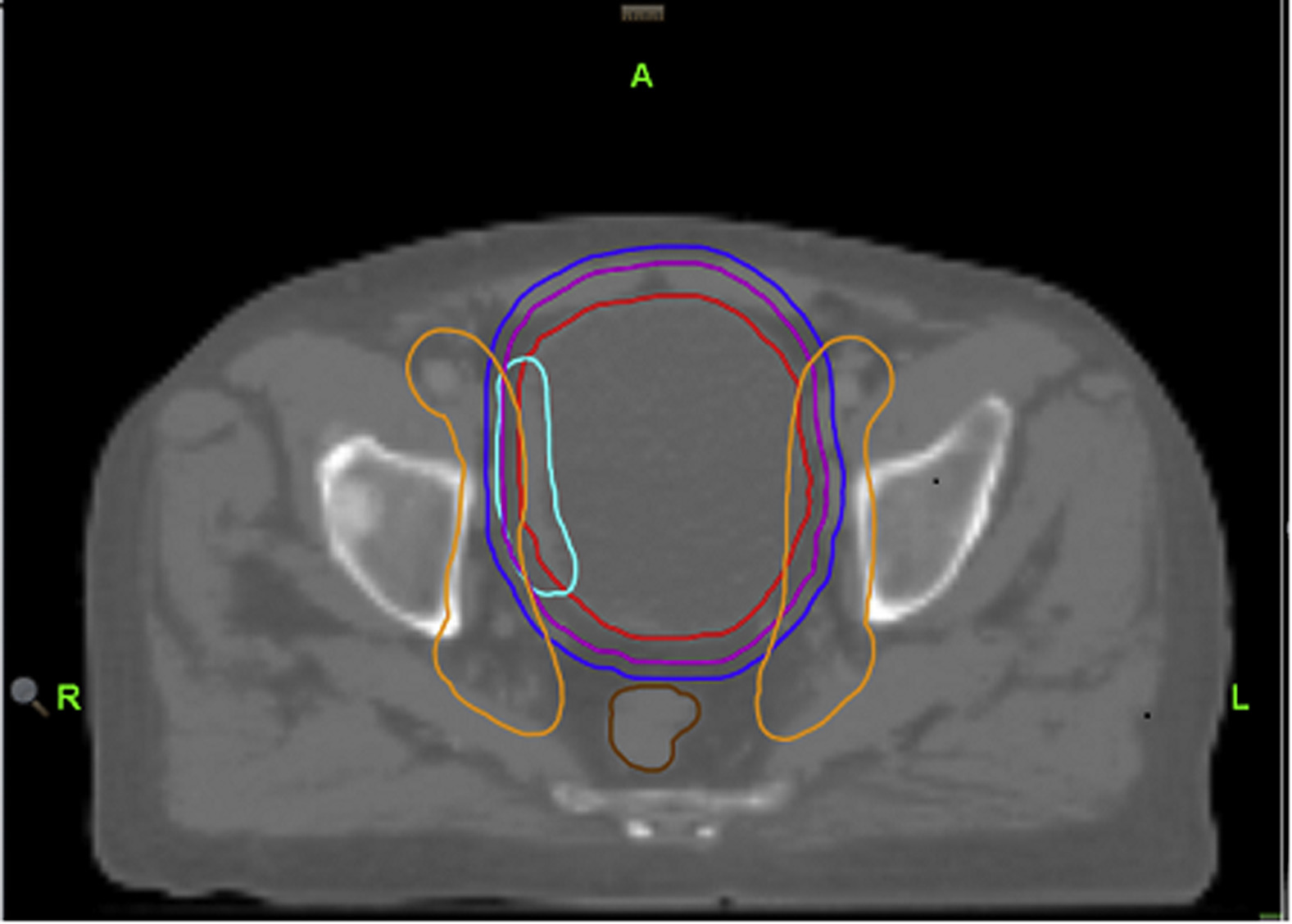
Radiotherapy planning for bladder preservation
For early, non-muscle-invasive cancer, the tumor is removed using a camera and instrument passed through the urethra. There are no cuts on the outside of the body, and most patients go home within a day or two.
For muscle-invasive cancer where bladder preservation is not suitable or not chosen, the whole bladder is removed. The surgeon then creates a new way for urine to leave the body using a small piece of your own intestine, so you can continue with a full, active life afterward.
For early disease, chemotherapy can be placed directly into the bladder through a catheter. For deeper or spreading cancer, it is given through an IV to reach cancer cells anywhere in the body, often before surgery to shrink the tumor or after surgery to clear any remaining cells.
Beyond BCG for early disease, modern immunotherapy drugs given through an IV help the immune system fight advanced bladder cancer, and are an important option when chemotherapy alone is not enough.
These drugs attack specific features of the cancer cells to stop them growing, and are used particularly when standard chemotherapy is not working well.
Urology, gynaecologic oncology and radiation oncology work together, and every case is reviewed by the tumor board before a treatment plan is set.

Urology
Consultant Urologist
Trained in modern camera-based and reconstructive urologic surgery, from early TURBT through to radical cystectomy with urinary diversion, with a focus on protecting urinary function wherever possible.

Gynaecologic Oncology
MBBS, MS (OBG, TUTH, IOM) · Fellowship in Gynaecologic Oncology, AGOI (India) · Laparoscopy Surgery Training, Germany
Works alongside the urology team for women where the tumor is close to the uterus or vagina, so both the cancer and pelvic anatomy are treated safely in one combined plan.

Radiotherapy (Bladder Preservation)
MBBS, KMC · MD, PGIMER Chandigarh
Leads radiotherapy planning for bladder preservation, for patients choosing to avoid bladder removal.
| Service | Team |
|---|---|
| Cystoscopy and diagnosis | Dr. Hari Baral |
| TURBT | Dr. Hari Baral |
| BCG therapy | Urology team |
| Bladder preservation (radiotherapy and chemotherapy) | Dr. Simit Sapkota, with Medical Oncology |
| Radical cystectomy with urinary diversion | Dr. Hari Baral |
| Combined surgery for women with pelvic involvement | Dr. Hari Baral with Dr. Suresh Kayastha |
| Chemotherapy, immunotherapy, targeted therapy | Medical Oncology |
A simple consultation and review of your reports, or an urgent visit if you have blood in your urine.
Urine test, cystoscopy, and scans as needed, to confirm the diagnosis and its extent.
The full team designs your treatment plan together and explains it to you in plain terms before anything begins.
Scheduled cystoscopy and scans afterward, to catch any recurrence early and act on it quickly.
Yes. Many patients still assume they must travel to India for cancer treatment, but that is no longer necessary. Diagnosis, TURBT, BCG therapy, bladder preservation, radical cystectomy, chemotherapy and immunotherapy are all available at KCC, following the same NCCN and ESMO protocols used internationally. Staying in Nepal also means avoiding the cost of travel and accommodation, and recovering close to family, in your own language, with familiar food, which genuinely helps recovery.
Send it on WhatsApp and our team will review it and advise you, including whether bladder preservation is an option for you.
Main hospital: Tathali, Bhaktapur · City Clinic: New Baneshwor, Kathmandu
 Book Appointment