 Kathmandu
Cancer Center
Kathmandu
Cancer Center
Kathmandu
Cancer Center
Kathmandu
Cancer Center
Liver cancer, whether it starts in the liver (HCC) or has spread there from another cancer, does not always mean major surgery or travel abroad. At KCC, the same team treats both, with surgery when it is the right choice, and with brachytherapy, RFA, microwave ablation, TACE and SBRT when it is not.
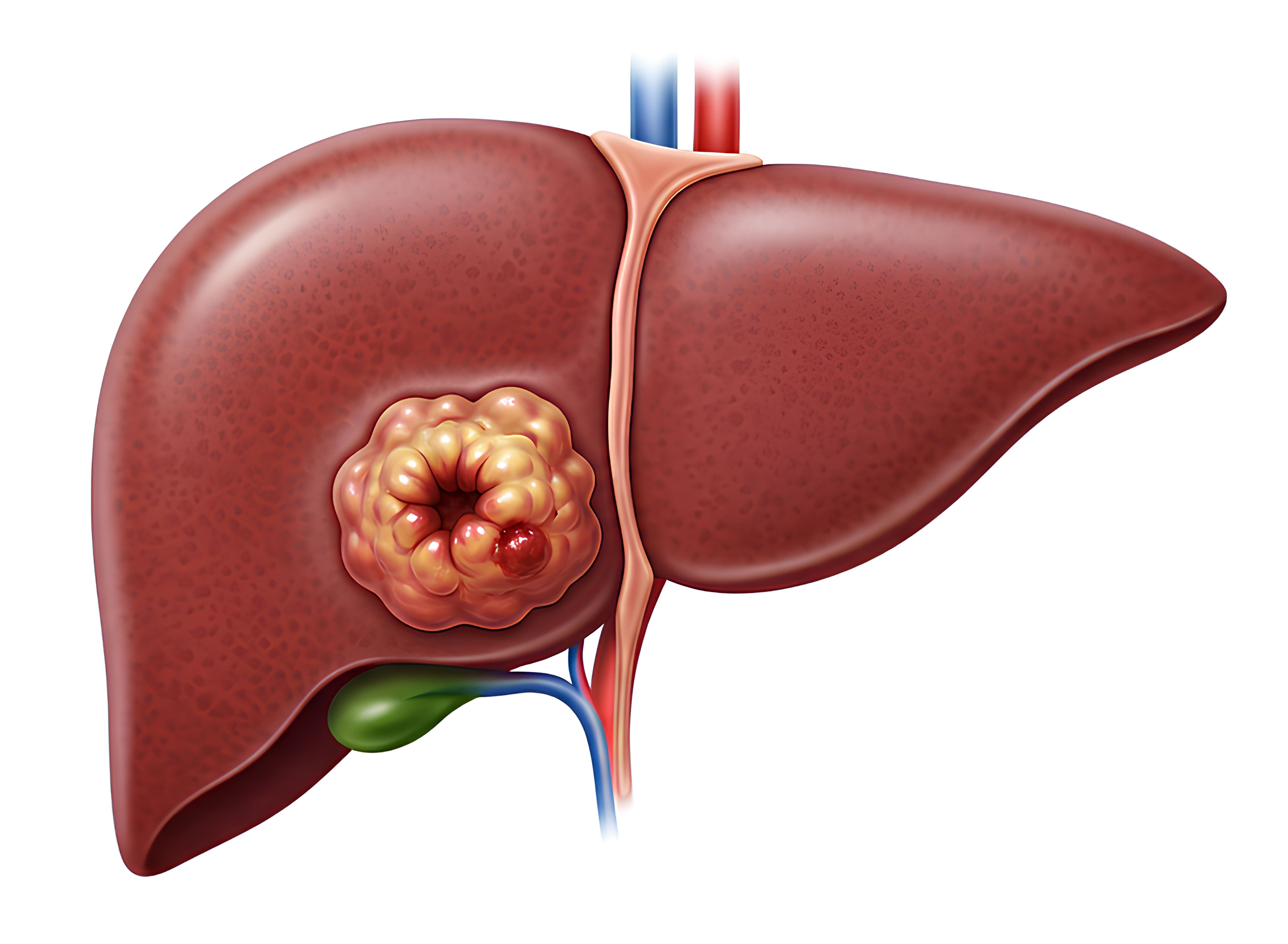
Liver Cancer
Liver cancer means an abnormal growth in the liver. It comes in two very different forms, and it matters which one you have, because the treatment is not the same.
This is cancer that starts in the liver itself. In Nepal, it almost always develops in a liver that has already been damaged, most often by long-term hepatitis B or hepatitis C infection, or by cirrhosis from any cause. HCC is what most people mean when they say "liver cancer."
This is a different cancer, commonly starting in the colon, stomach, breast, lung or pancreas, that has spread to the liver through the bloodstream. The tumor in the liver is made of the original cancer's cells, not liver cells, so it is treated according to that original cancer, alongside liver-directed treatment when it helps.
Both are seen and treated regularly at KCC. Your scans and pathology will show the care team which type you have, and that is what decides the treatment path from here.
Early liver cancer very often causes no symptoms at all. This is exactly why screening matters more than waiting for symptoms, for people who carry the risk factors below.
Screening for these groups is simple: an ultrasound and an AFP blood test every six months. This is how HCC gets caught while it is still small and easiest to treat.
Alpha-fetoprotein is often raised in HCC. It supports the diagnosis and helps track treatment response, but a normal result does not rule out cancer, so it is never used alone.
A contrast CT or MRI scan shows the tumor's size, number, and its exact position relative to the liver's blood vessels. In a patient with cirrhosis, a typical pattern on these scans can confirm HCC without needing a biopsy.
Used when the scan pattern is not typical, or for liver metastasis, to confirm which original cancer the tumor cells belong to.
Doctors combine tumor size and number, how well the rest of the liver is working, and your overall health, into a stage. This is what actually decides your treatment, not the stage number by itself.
What matters practically is this: is the cancer confined to the liver or has it spread beyond it, and is the healthy part of your liver working well enough for a given treatment. Your tumor board will explain exactly where your case falls, in plain terms, before recommending anything.
Most hospitals in Nepal can offer one or two ways to treat a liver tumor. KCC brings six options together under one tumor board, so the method chosen fits your tumor, not the other way around.
On top of these six, KCC also offers liver brachytherapy, an internal radiation technique available at only a handful of centers worldwide, and currently offered nowhere else in Nepal.
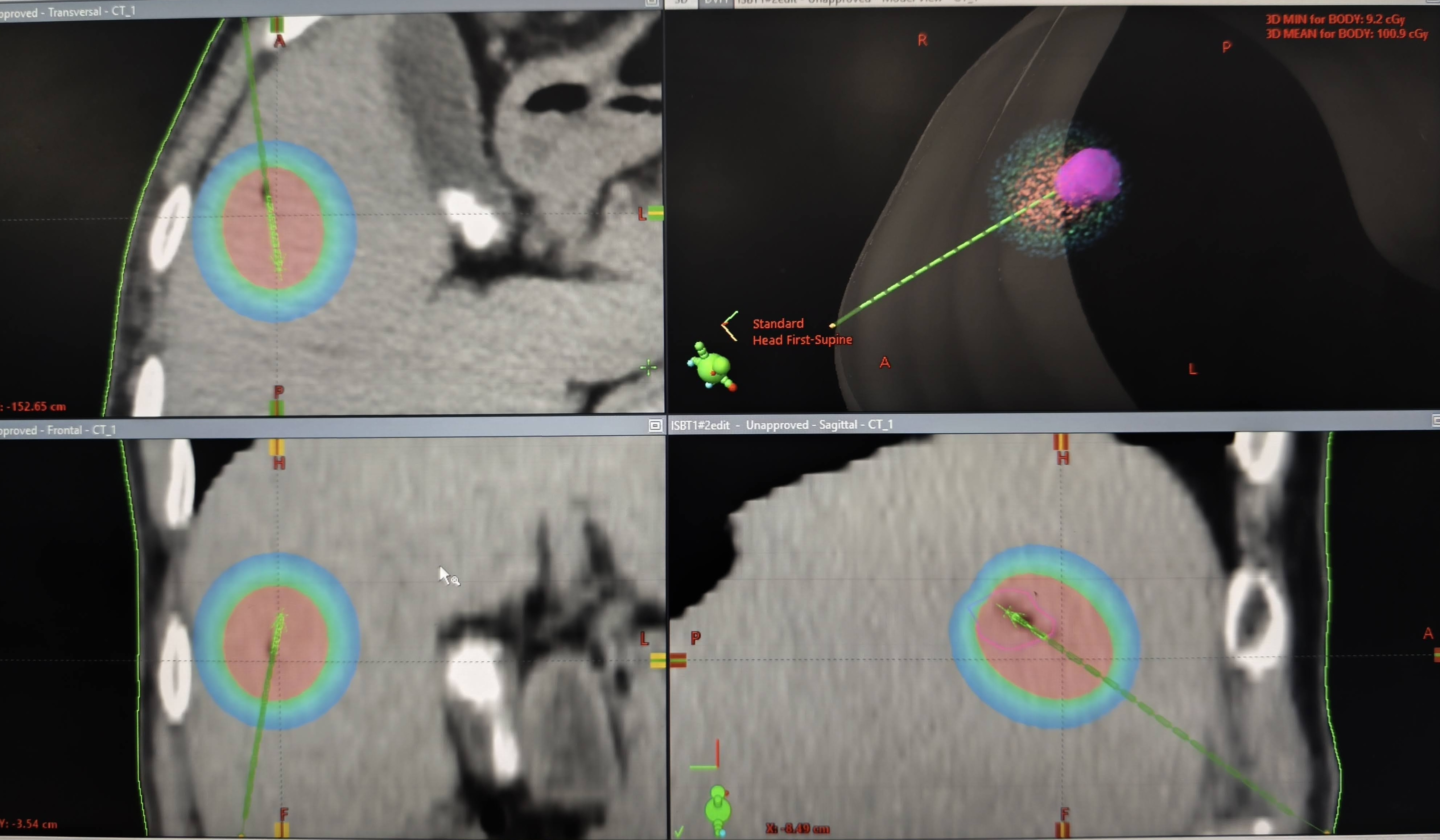
Internal radiotherapy (Brachytherapy) for Liver Cancer, only at KCC in Nepal
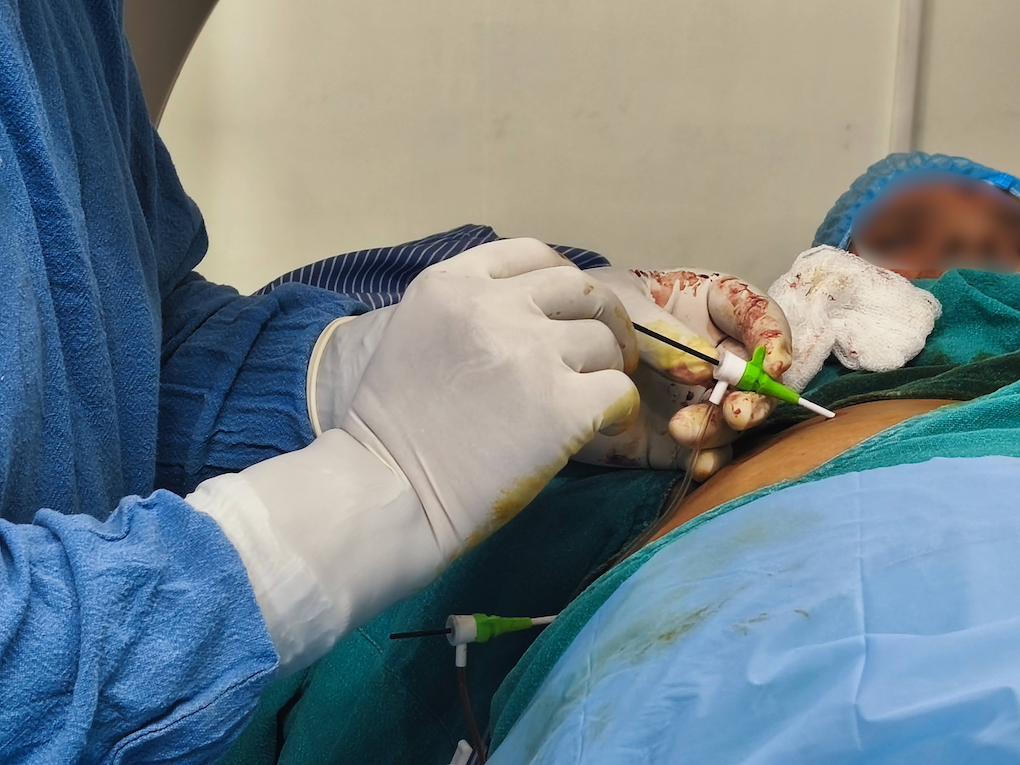
Ablation of a liver tumor by the Interventional Radiology team
Often, yes. A large share of liver tumors, both HCC and liver metastases, can be treated without an operation. Which method fits depends on the tumor's size, number and position, and how well the rest of your liver is working. Here is what each option actually involves.
Thin catheters are placed directly into the tumor under imaging guidance, and a high dose of radiation is delivered from inside the tumor itself, sparing the surrounding healthy liver. Suited to tumors that are not fit for surgery, RFA or microwave ablation, including tumors close to major blood vessels. Performed by Dr. Simit Sapkota.
A thin needle is guided into the tumor using ultrasound or CT, and heat generated at its tip destroys the tumor tissue directly. Best suited to smaller tumors. No large incision, and most patients go home the next day. Performed by Dr. Bibek Nepal.
Works on the same needle-based principle as RFA, using microwave energy instead of radiofrequency, which treats a larger zone faster and works more reliably near blood vessels. Performed by Dr. Bibek Nepal.
Chemotherapy is delivered directly into the blood vessel feeding the tumor, then that vessel is blocked, cutting off the tumor's blood supply while sparing the rest of the body. Used when surgery or ablation is not suitable, or to shrink a tumor before another treatment. Performed with Dr. Sundar Suwal.
Stereotactic body radiotherapy delivers a precisely targeted, high dose of external radiation to the tumor over a small number of sessions, without any incision. An option for tumors not well suited to ablation or brachytherapy.
Chemotherapy, targeted therapy and immunotherapy (including combinations such as atezolizumab with bevacizumab for HCC) for disease that has spread beyond the liver, or alongside local treatment in select cases, following international protocols.
For patients with good liver function and a tumor in a position that allows it, removing the affected part of the liver surgically can offer the best chance of cure. Dr. Deep Lamichhane performs complex liver surgery using techniques designed to preserve as much healthy liver tissue as possible.
For a small group of patients with early HCC and significant cirrhosis, a liver transplant, rather than resection, is genuinely the best option. KCC does not perform transplant surgery itself. When the tumor board identifies a patient as a possible candidate, we say so directly and help coordinate referral to a transplant center, while continuing to manage the rest of your care here.
Liver cancer can return after any treatment, which is why follow-up scans and AFP tests continue on a set schedule once treatment ends. A recurrence is not treated as a failure of the earlier treatment. It is treated as new information, and the tumor board decides the next step from there, whether that means repeating the same treatment, switching to a different one, or moving to systemic therapy.
Surgical oncology, radiation oncology and interventional radiology work together, and every case is reviewed by the tumor board before a treatment plan is set.
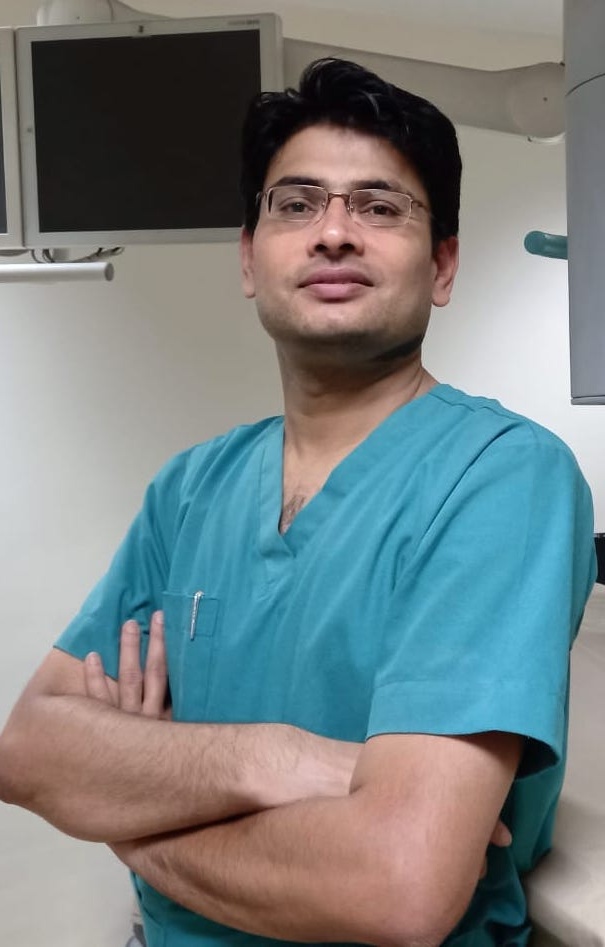
HPB & Surgical Oncology
MS (Surgery) · Fellowship in Surgical Oncology & GI-HPB Surgery, Tata Medical Centre, Kolkata
Complex liver surgery. Performed Nepal's first CRS+HIPEC procedure.

Brachytherapy (Liver Cancer)
MBBS, KMC · MD, PGIMER Chandigarh
Liver brachytherapy, offered at only a handful of centers worldwide.

Interventional Radiology
MD Radiodiagnosis, TUTH · Fellowship in Interventional Radiology, Max Superspeciality Hospital, New Delhi
RFA, microwave ablation, and daily biopsy service.
| Service | Team |
|---|---|
| Complex liver surgery (hepatectomy) | Dr. Deep Lamichhane |
| Liver brachytherapy | Dr. Simit Sapkota |
| RFA and microwave ablation | Dr. Bibek Nepal |
| TACE | Interventional radiology team |
| SBRT | Radiation oncology team |
| Chemotherapy, immunotherapy, targeted therapy | Medical oncology |
| Liver transplant | Referred to a transplant center; managed in coordination with KCC |
AFP blood test, CT or MRI, and biopsy where needed, with results in two to three days.
The full team designs the safest, most effective plan together, and explains it to you in plain terms before anything begins.
Surgery, brachytherapy, ablation, TACE, SBRT, systemic therapy, or a combination, chosen for your specific case.
Scheduled scans and AFP monitoring afterward, to catch any recurrence early and act on it quickly.
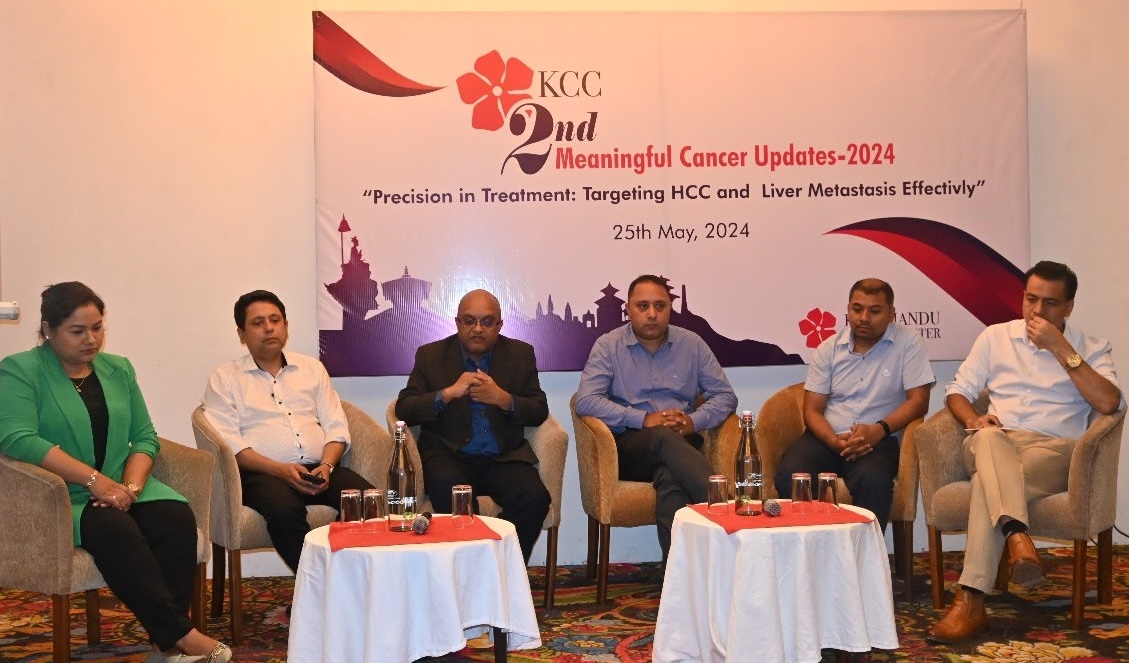
KCC's Liver Cancer Team with visiting surgeons, pathologists, interventional radiologists and medical oncologists, at KCC's forum on precision treatment for HCC and liver metastasis.
Send it on WhatsApp and our team will review it and advise you, including whether treatment without surgery is an option for you.
Main hospital: Tathali, Bhaktapur · City Clinic: New Baneshwor, Kathmandu (Dr. Bibek Nepal also available)
 Book Appointment